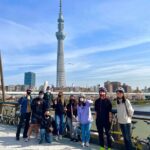
Tokyo feels big until you ride it. This 3-hour e-bike tour is a practical way to connect Tokyo’s history, neighborhoods, and everyday street life without arriving exhausted. Guides such as Yo and Ted come loaded with context, and the ride structure helps you move at your own pace while still hitting the right places.
What I like most is the combo of small-group attention (up to 6) and smart pacing. You’re not stuck with a rigid schedule of only major landmarks; the route mixes money-district architecture, Imperial Palace gates, and food-stall streets that are harder to reach efficiently on foot. The bikes also make it easy to cover ground, which many riders say is the difference between seeing Tokyo and just surviving it.
One thing to consider: this is still a bike tour. If you can’t comfortably ride a bicycle, you can’t join, and you’ll be sharing roads with Tokyo traffic, especially around busier city blocks. Also, if weather is rough or heat is extreme in summer, the tour may be canceled or stopped.
In This Review
- Key highlights worth caring about
- Getting oriented fast with e-bike power in Tokyo
- Kanda start: where you meet and how the tour begins
- Morning circuit: Kanda to Tokyo Station, Imperial Palace gates, and Tsukiji
- Tokyo Station Marunouchi Ekimae Hiroba (photo + history explanation)
- Kokyo Otemon Gate: moat views and the Fujimi yagura tower
- Imperial Palace gardens area and the castle gate feel
- Ginza backstreets and the right kind of street contrast
- Tsukiji Outer Market: small old-school shops and everyday energy
- Ginza backstreets to Tsukiji: why this route works
- Afternoon circuit: Akihabara, Kappabashi tool street, Asakusa, and Ryogoku
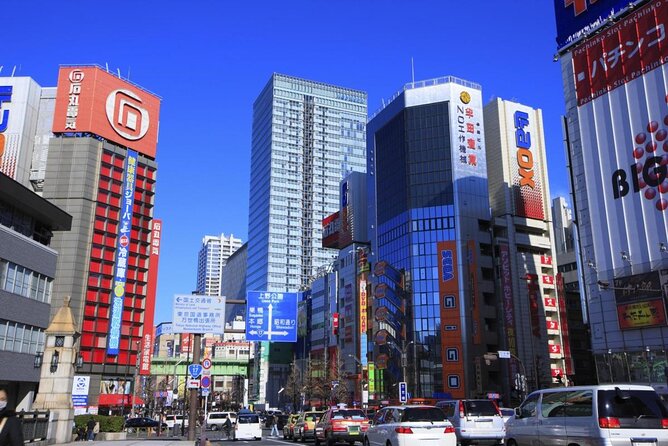
- Akihabara: subculture streets and less formal stops
- Kappabashi Tool Street: knives, kitchen gear, and serious shopping energy
- Asakusa: the classic temple moment that still feels real
- Ryogoku: sumo area and the chance of a real encounter
- Nihonbashi Bridge: the measurement point meaning
- How the guides like Yo, Ted, Jenny, Take, Kazu, Ninja, and Yoppi change the experience
- E-bike comfort and the reality of busy city streets
- Rain and heat: when Tokyo weather changes the plan
- Price and value: is $63.01 worth it?
- Who should book this e-bike tour (and who should skip it)
- Should you book this Tokyo e-bike tour?
- FAQ
- How long is the 3-hour Tokyo e-bike tour?
- What’s included in the price?
- Where do I meet the tour?
- What should I bring?
- What are the age and height requirements?
- What happens if it rains or the weather is too hot?
Key highlights worth caring about
- E-assist power that lets you explore without turning Tokyo into a leg workout
- Local English guides who explain customs and details, not just landmarks
- Kanda-to-temple-to-market routing that mixes big sights with local streets
- Season and time-of-day routes (morning vs afternoon) so you get options
- Weather reality planning using day-before checks and summer heat thresholds
Getting oriented fast with e-bike power in Tokyo
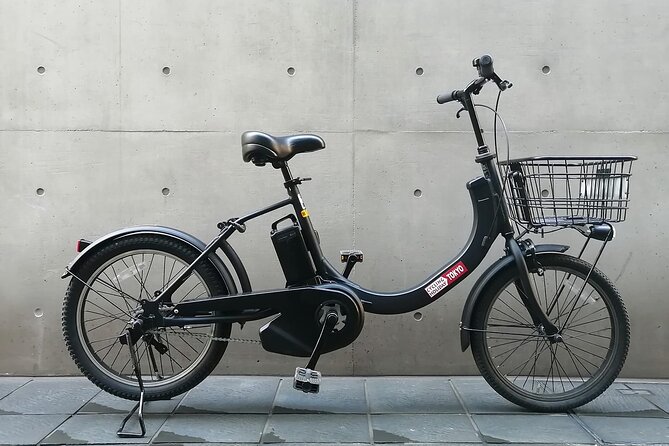
Tokyo’s sprawl can be a trap. You spend time hopping trains, walking between stations, and losing energy before you even reach the good streets. An e-bike tour solves that by giving you a controlled way to see lots of areas in a short window.
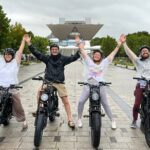
This tour is designed around smooth “flow” riding. You cruise at an easy effort level, then you stop for photo moments and short explanations. One review theme is clear: the e-bikes feel safe and solid enough to make the ride fun, not stressful. If you’ve got jet lag or limited days, it’s a smart first-or-second-day move.
And the “at your pace” part matters. You’re not forced into a sprint. The guide keeps the group together, but you still have the option to take in what’s around you before moving on.
You can also read our reviews of more tours and experiences in Tokyo.
Kanda start: where you meet and how the tour begins
The ride starts at Cycling Holiday Tokyo near Kanda Station. The shop is about a minute walk from the west exit of JR Kanda Station, and you’ll find a waiting room, restroom, and luggage storage. That luggage detail is genuinely useful: you can leave your bag there for the duration as long as you don’t stash valuables.
Before rolling out, you’ll get the bike and gear included in your price: an e-assist bike, a helmet, and insurance. In colder months you may also receive simple gloves, and in summer you get cooling products. You also get simple rain gear, which helps if the sky turns on you mid-tour.
Tour size is capped at 6 travelers, and there’s a minimum of 2 per departure. That small scale is why the guide can actually answer questions and keep track of everyone, even when people are stopping for photos.
Morning circuit: Kanda to Tokyo Station, Imperial Palace gates, and Tsukiji
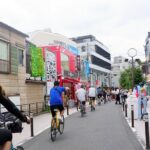
The morning route has a classic “Tokyo core” feel, but it doesn’t get stuck only on postcard sights. It starts in Kanda, a smaller downtown area where Japanese business life shows up in the form of compact streets and small-style bars. Even if you don’t go inside anywhere, the vibe helps you understand this part of Tokyo beyond office towers.
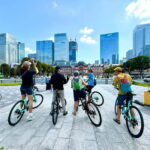
From there, you ride through the financial center with modern architecture that’s built for views and photos. You’ll get a feel for the contrast: sleek buildings and major roads on one side, then quieter local lanes on the other.
Tokyo Station Marunouchi Ekimae Hiroba (photo + history explanation)
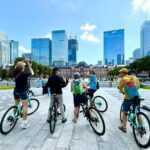
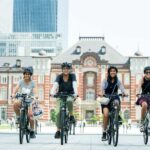
Next up is Tokyo Station’s Marunouchi area. You’ll look at the Tokyo Station Marunouchi building from a nearby street and learn about the station’s history. It’s a quick stop, but it’s the kind of stop that pays off later when you’re using the station yourself.
Kokyo Otemon Gate: moat views and the Fujimi yagura tower
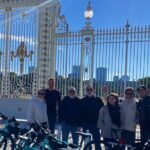
Then comes the Imperial Palace area. From the Otemon Gate, you look across the moat toward the Fujimi yagura tower. The stop is short, but it’s one of those moments that helps you visualize where the palace complex sits inside the city. Tokyo can feel flat on a map until you see the scale in person.
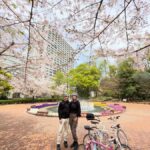
Imperial Palace gardens area and the castle gate feel
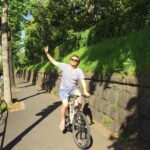
The route also includes a stretch near the Imperial Palace gardens, described as a spacious area around 200,000 square meters even though it’s in central Tokyo. You’ll also pass the Sakuradamon gate area, which adds that old-school castle-gate atmosphere that Tokyo does so well.
Ginza backstreets and the right kind of street contrast
Between Imperial Palace and food-time, you may cycle through Ginza backstreets with luxury stores nearby—or you might ride more main-street depending on traffic and conditions. This is one of those “you feel the city” segments. It’s easier to compare lifestyles and street styles when you can glide past them without constantly stopping for trains.
Tsukiji Outer Market: small old-school shops and everyday energy
The morning ride often ends with Tsukiji Outer Market. This is not the big-ticket tourist version; it’s more like a lane of old-fashioned food shops selling interesting items. The point isn’t a long shopping spree. It’s to see how local food culture looks on the street, then grab whatever you want after the tour.
Ginza backstreets to Tsukiji: why this route works
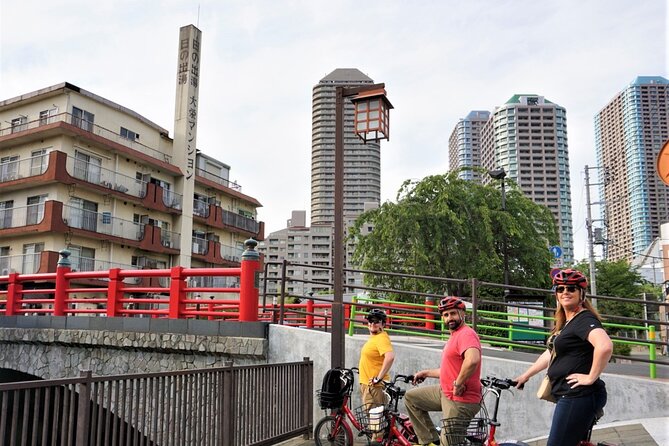
If you’re wondering what makes this more than just a “see the sights” bike ride, it’s the transitions.
You go from formal and historical spaces (Imperial Palace gates) to high-end Tokyo (Ginza) and then to working-market Tokyo (Tsukiji Outer Market). On foot, these transitions can take forever. On the e-bike, you keep momentum, but you still get time to look around.
A few riders specifically liked that the tour helps them orient themselves. After riding, they could return to favorite spots later on foot, with less uncertainty.
Afternoon circuit: Akihabara, Kappabashi tool street, Asakusa, and Ryogoku
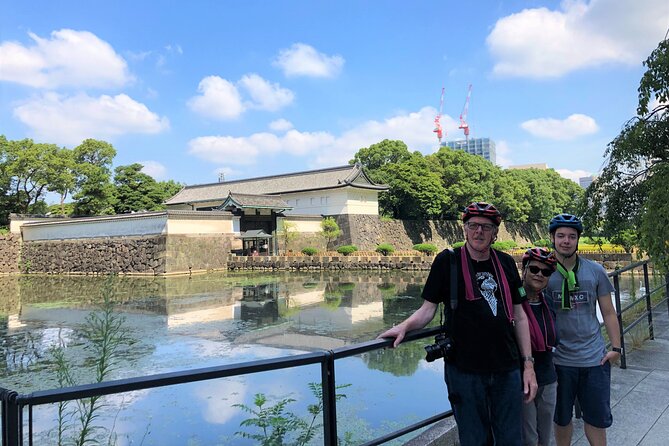
If you choose the afternoon tour, you get a different Tokyo mood. Instead of starting in the financial core, you move toward the city’s more playful and practical subcultures.
Akihabara: subculture streets and less formal stops
In Akihabara, you’re in “youth and geek culture” territory. Expect a sense of the scene rather than a long show. One stop can be enough to orient you, especially if you’ll come back later to browse more deeply.
Kappabashi Tool Street: knives, kitchen gear, and serious shopping energy
Next is Kappabashi Street (Kappabashi Dogugai), known for kitchen utensils, professional cooking tools, and Japanese knives. If shopping is your thing, this is one of the most practical neighborhoods in the whole ride. The tour may include time to browse and shop, so you’re not just passing by.
Asakusa: the classic temple moment that still feels real
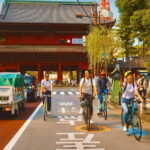
Then comes Asakusa, famous for its oldest temple in Tokyo. It’s the kind of stop that helps you check a major box, but you still approach it by bike, not by funneling through a single line of foot traffic. You’ll get about a short window to take it in properly.
Ryogoku: sumo area and the chance of a real encounter
Finally, Ryogoku enters the picture—sumo territory. You might meet real sumo wrestlers if you’re lucky, which is a fun “Tokyo can surprise you” payoff. Even if you don’t catch anyone in the moment, Ryogoku’s atmosphere makes the stop feel like more than a label on a map.
Nihonbashi Bridge: the measurement point meaning
On either AM or PM options, the route can include Nihonbashi Bridge, described as once again the center. You’ll also learn that road distance measurement starts from this bridge. It’s one of those Tokyo facts that sticks, because it explains why Tokyo’s map feels the way it does.
How the guides like Yo, Ted, Jenny, Take, Kazu, Ninja, and Yoppi change the experience
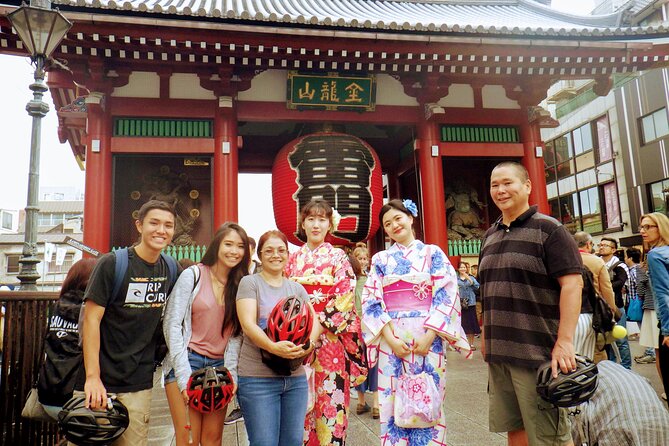
A bike tour can become just motion—until the guide turns it into context. Here, the guide quality shows up hard in the reviews.
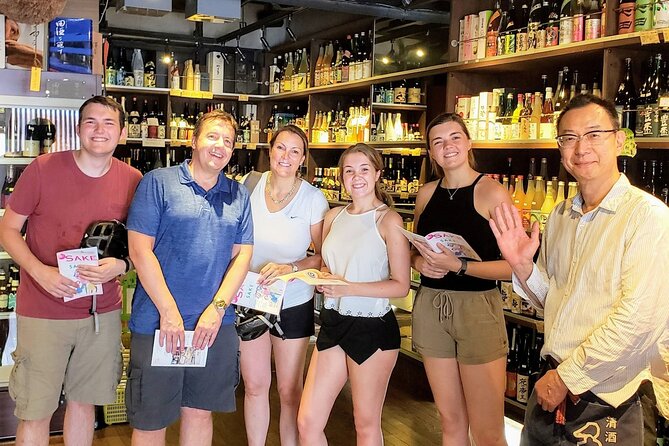
Guides (people like Yo, Ted, Jenny, Take, Kazu, Ninja, and Yoppi) are repeatedly described as friendly, patient, and tuned to safety. They answer questions, keep the group together, and explain cultural details that help you read what you’re seeing.
One standout pattern: they don’t just say what a place is. They explain how people use it—especially around temples and rituals. That means when you later visit Asakusa or another shrine on your own, you’re not guessing how to behave.
E-bike comfort and the reality of busy city streets
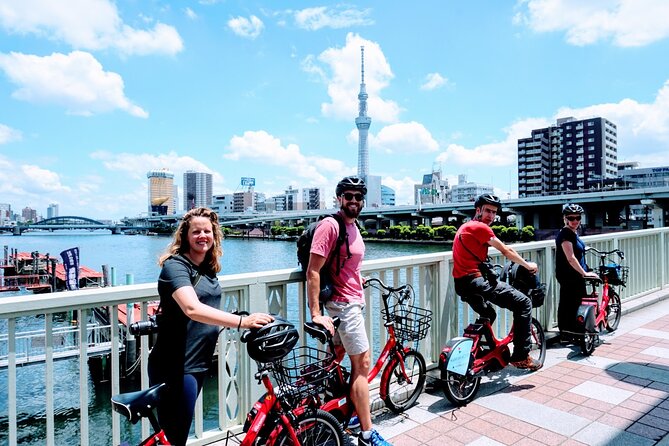
This tour is built for real movement, so you’ll be riding in urban areas. Reviews frequently praise how easy the bikes are to operate, and how the e-assist makes it possible to move longer distances without feeling destroyed.
Still, there’s a practical consideration: Tokyo streets can be busy. One common piece of advice is to be comfortable cycling through dense city blocks and to keep up with the guide. If you tend to fall behind, tell the guide at the start; they’ll manage the pace and regroup if needed.
Rain and heat: when Tokyo weather changes the plan
The tour is weather-dependent. If rain is expected or conditions are poor, the tour may be canceled, with a decision made using the weather forecast the day before. If the forecast is sunny but rain happens during the tour, the guide decides whether to continue or stop.
In summer (July and August), the heat risk matters. The company uses a heat stress reference (WBGT) to judge whether conditions are dangerous. If the guide stops the tour or cancels, you’ll receive a refund (the data notes refund if tour is stopped due to dangerous heat conditions).
So yes, pack smart. Even with cooling products provided in summer, I’d still recommend bringing towels and sunscreen in hot months and warm layers plus gloves in winter, since those are specifically recommended.
Price and value: is $63.01 worth it?
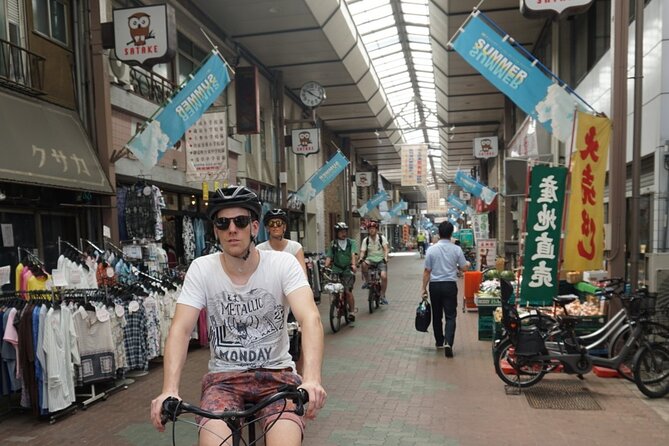
At $63.01 per person for about 3 hours, the value is strongest when you compare it to what you’d pay for: a guide plus bike rental plus insurance plus the time saved.
You get:
- Bike rental (e-assist) and helmet
- English guide
- Insurance
- Simple rain gear
- Cooling products or gloves depending on season
- Luggage storage at the shop (except valuables)
Food is not included, so you still need to budget for drinks and snacks. But you’re also not stuck with a prepaid meal that might not match your tastes. You can choose what you want at Tsukiji Outer Market or wherever else the route gives you time.
If you’re a first-time visitor, the tour also pays you back by reducing planning time. Instead of guessing which neighborhoods to prioritize, you get a connected loop across Tokyo’s different faces.
Who should book this e-bike tour (and who should skip it)
This is a great fit if:
- You want a first orientation to Tokyo quickly
- You prefer guided context with movement, not just sitting in one area
- You’d like to cover big sights plus side streets without getting lost
- You’re traveling with teens or family and want a manageable activity window (this ride has worked well for groups including teens in reviews)
Skip it if:
- You can’t ride a bicycle comfortably (the tour requires that ability)
- You hate sharing roads with cars and buses, even if the pace is controlled
- You’re arriving without any flexibility for weather and heat (because rides can be canceled or shortened)
Should you book this Tokyo e-bike tour?
Book it if you want a smart, time-efficient way to connect Tokyo neighborhoods with real local explanations. The mix of Kanda, Tokyo Station, Imperial Palace gates, and a food stop like Tsukiji Outer Market, plus optional afternoon stops like Akihabara, Kappabashi, Asakusa, and Ryogoku, makes it feel like a tour of Tokyo’s personality, not a checklist.
Don’t book it if you’re only chasing a single landmark or you want a slow walk-only day. This is motion-first, guided-second, and that’s exactly what makes it efficient.
If you’re choosing between AM and PM, pick based on your mood: mornings lean more history/central-city core; afternoons shift toward subculture and market-and-temple variety.
FAQ
How long is the 3-hour Tokyo e-bike tour?
The tour lasts about 3 hours.
What’s included in the price?
Included are the rental e-assist bike, helmet, English guide, insurance, simple rain gear, and seasonal items (cooling products in summer or gloves in winter). You can also leave luggage (except valuables) at the shop during the tour.
Where do I meet the tour?
You meet at Cycling Holiday Tokyo at 3-chōme-8-6 Uchikanda, Chiyoda City, Tokyo. It’s about a 1-minute walk from the west exit of JR Kanda Station.
What should I bring?
In summer, bring towels and sunscreen. In winter, bring warm clothes and gloves. The tour provides some seasonal items, but these basics are still recommended.
What are the age and height requirements?
The minimum age is 12 years, and the minimum height is 147 cm (4.8 ft).
What happens if it rains or the weather is too hot?
If it’s canceled due to poor weather, you’ll be offered a different date or a full refund. In extreme summer heat, the guide may cancel departure or stop the tour based on heat stress conditions, and the fee will be refunded if the tour is stopped due to dangerous conditions.