REVIEW · TOKYO
Tokyo Top Highlights 3h Guided E-bike Tour
Book on Viator →Operated by Japan Wonder Travel · Bookable on Viator
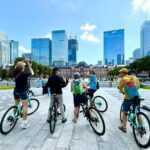
Tokyo shrines, but make it easy. This guided e-bike tour starts in Tsukiji and runs circular routes that bring you back to the same shop, so you focus on sights instead of route anxiety. You pick one of three loops and then follow your guide through Tokyo’s mix of big landmarks and quieter neighborhoods.
I like the small group size (max 6), because the pace feels personal and you’re not stuck watching from the sidelines. I also like the built-in break with an included Japanese snack, which keeps the ride from feeling like nonstop motion.
One thing to keep in mind: you’ll be cycling on real city streets with cars and other bikes, so you want moderate comfort riding near traffic and you should be on time for the briefing (late riders can’t jump in mid-tour).
In This Review
- Key highlights I’d circle first
- Starting in Tsukiji: the shortcut to Tokyo’s best angles
- E-bike basics: how this tour avoids the usual cycling stress
- Tokyo City Route: Tokyo Station, doll-street sweets, and a Zen garden
- Stop 1: Tokyo Station (about 15 minutes)
- Stop 2: Ningyocho Street (about 20 minutes)
- Stop 3: Kiyosumi Teien Japanese Garden (about 25 minutes, ticket included)
- Stop 4: Tomioka Hachimangu Shrine (about 30 minutes)
- Tokyo Bay Sunset and Night Route: Rainbow views, Odaiba photos, and shrine stops
- Stop 5: Sumiyoshi Shrine (about 15 minutes)
- Stop 6: Tsukuda Tendai Jizoson (about 5 minutes)
- Stop 7: Passing Tokyo Skytree (about 1 minute)
- Stop 8: Passing teamLab Planets TOKYO (about 1 minute)
- Stop 9: Passing Tokyo Big Sight (about 10 minutes)
- Stop 10: Aqua City Odaiba break with snack (about 30 minutes)
- Stop 11: Gundam Base Tokyo (about 10 minutes)
- Tokyo Tower Route: Zojo-ji, Atago hill ride, and Hibiya Park trees and flowers
- Stop 12: Zojo-ji Temple (about 30 minutes)
- Passing Tokyo Tower (333 meters)
- Stop 13: Atago Shrine (about 20 minutes)
- Stop 14: National Diet Building (about 5 minutes)
- Imperial Palace pass with pond ducks (on the way)
- Stop 15: Hibiya Park snack and break (about 20 minutes)
- Stops, timing, and how to avoid feeling rushed
- Price and value: is $63.67 a smart use of time?
- What to know before you ride (so the day stays fun)
- Should you book this Tsukiji e-bike tour?
- FAQ
- What routes are available on this Tokyo e-bike tour?
- Where is the meeting point?
- How long is the tour?
- What’s included with the tour price?
- Is the snack included, and are there dietary restrictions?
- What are the age and height limits?
- Is there a place to store luggage?
- What happens if the tour is canceled due to rain or bad weather?
Key highlights I’d circle first

- Tsukiji start with circular routes so you never have to figure out how to get back
- Three route styles: City, Bay Sunset/Night, or Tokyo Tower highlights
- E-bike support keeps the hills and longer stretches from feeling like a workout
- Snack stop on the move with Japanese treats chosen by the guide
- Max 6 riders for a calmer ride and more time for questions and safety checks
Starting in Tsukiji: the shortcut to Tokyo’s best angles
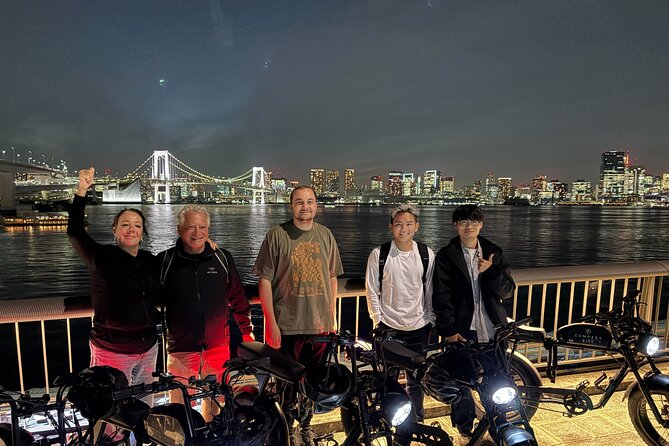
The meeting point is at 6-chōme-11-5 Tsukiji, Chuo City, Tokyo, and the tour runs from there back to the same place. That matters more than it sounds. Tokyo can be confusing on foot, and this format keeps you moving without worrying about where you’ll end up.
Plan to arrive early enough to settle in, but don’t panic if the shop is closed when you show up. The guide is scheduled to arrive about 15 minutes before the start time for the e-bike briefing. That briefing is your real “get ready” moment, especially if you’ve never ridden an e-bike in traffic.
You can also read our reviews of more tours and experiences in Tokyo.


E-bike basics: how this tour avoids the usual cycling stress
This is an e-bike tour, not a fitness test. You get an e-bike and helmet, and the operator provides gloves during winter. There’s also luggage storage at the shop, and you can rent a knapsack for convenience (it’s listed as free).
In practice, you’re dealing with two kinds of effort: the physical effort of pedaling, and the mental effort of riding in a city. The e-bike reduces the physical side, which helps on the hillier parts, like the ride up toward Atago Shrine on the Tokyo Tower route. The mental side is handled by the guide keeping the group together and stopping often enough that you can reset your brain.
Also, the bikes are set up for a smoother ride at an easier speed. One safety note from the operator response is that the e-bike speed has been adjusted to be on the slower side. That’s a good sign if you’re nervous about being swept along.
Tokyo City Route: Tokyo Station, doll-street sweets, and a Zen garden
If you want a first taste of Tokyo that mixes classic landmarks with calmer corners, the Tokyo City Route is the easiest bet. It’s designed as a loop with multiple stops that balance architecture, food-ish culture, and a proper garden moment.
Stop 1: Tokyo Station (about 15 minutes)
You start at Tokyo Station, built in 1914. It has a Western-style feel, but the building blends well with the modern parts of the surrounding area. This is a great opener because it’s instantly recognizable, and it sets the tone: Tokyo can be both historic and highly engineered.
Stop 2: Ningyocho Street (about 20 minutes)
Next comes Ningyo-cho, the so-called doll town. The tour notes that you won’t find the old-school traditional dolls there anymore, but you do get a small cultural detour through the area—paired with a stop for traditional sweets. Even if you skip sweets back home, it’s worth trying because it’s less about the dessert and more about seeing a neighborhood texture that you’d likely miss on transit.



Stop 3: Kiyosumi Teien Japanese Garden (about 25 minutes, ticket included)
Then you reach Kiyosumi Teien, a Japanese garden that’s described as less known to typical tourists. This is the “pause” stop—time to slow down and notice details, not just snap photos. The admission ticket is listed as included, which makes this a better value stop than many tours that only pass by major sites.
Stop 4: Tomioka Hachimangu Shrine (about 30 minutes)
Finish the City loop at Tomioka Hachimangu, one of Tokyo’s important Shinto shrines in the historic Fukagawa area. The tour highlights its role in early sumo development. If you want a temple moment that connects religion and everyday Japanese history, this is a strong ending beat.
After that, the route brings you back to the starting area. The loop style is what keeps this from feeling like a collection of errands.
Tokyo Bay Sunset and Night Route: Rainbow views, Odaiba photos, and shrine stops
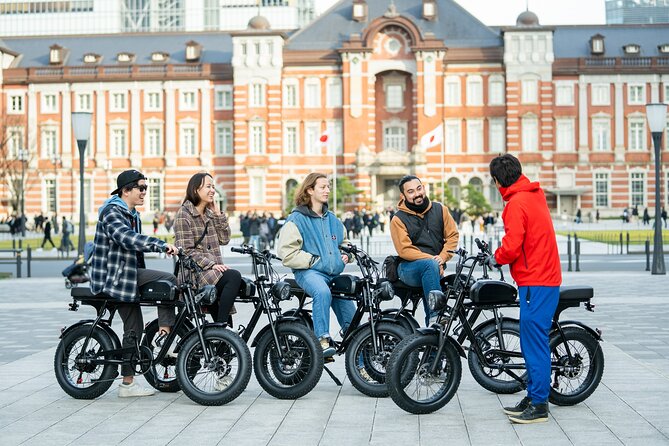
This is the route for you if you like skyline geometry and you want Tokyo at its most photogenic. The Tokyo Bay Route is built around a sunset-to-night feel, with water and big-city landmarks packed in.
Stop 5: Sumiyoshi Shrine (about 15 minutes)
You begin with Sumiyoshi Shrine, described as a more local-side shrine. The tour also calls out the experience of seeing how local people live around Tokyo. This is smart pacing: you start grounded, then the tour ramps up toward the modern bay area.
Stop 6: Tsukuda Tendai Jizoson (about 5 minutes)
Next is Tsukuda Tendai Jizoson, noted as a hidden-place stop. It’s brief, but that’s the point. The guide uses these quick stops to give you variety without stretching the total ride time.
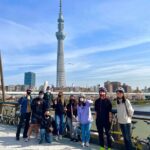
Stop 7: Passing Tokyo Skytree (about 1 minute)
You then pass Tokyo Skytree, the huge radio tower. It’s quick, but it works well if you’re doing a short tour and don’t want to lose time waiting outside.
Stop 8: Passing teamLab Planets TOKYO (about 1 minute)
There’s also a pass by teamLab Planets TOKYO. From the way the stop is described, you’ll mainly get exterior views from the bike. If you want tickets for inside, you’ll need separate plans, but the pass is still useful for orienting yourself in Odaiba/ bay-area Tokyo.
Stop 9: Passing Tokyo Big Sight (about 10 minutes)
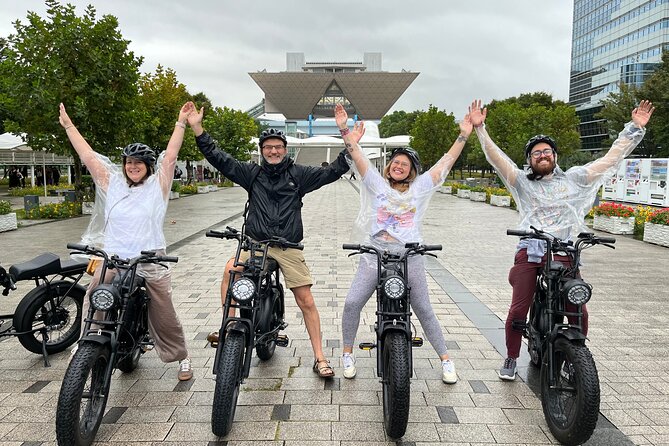
Next is Tokyo Big Sight, the large exhibition hall. The tour mentions the building’s unique design and the chance to take fun photos. In other words, it’s not a long museum stop; it’s an easy landmark moment.
Stop 10: Aqua City Odaiba break with snack (about 30 minutes)
Then comes a more human-sized break at Aqua City Odaiba, where you get a quick rest and the included Japanese convenience-style snack. For me, this kind of break is what makes an e-bike tour feel like an experience, not a transportation shortcut. It gives your legs and your attention span a reset.
Stop 11: Gundam Base Tokyo (about 10 minutes)
Finally, you stop near the Gundam Base Tokyo area and see the Gundam statue listed as 19.7 meters tall. This is one of those photo stops that’s instantly impressive in person, especially if you’re used to only seeing characters on screens.
If you’re worried about biking at night: the e-bike support helps on longer stretches, but you should still ride calmly and follow the group. Good lights and a clear head matter when the city is full of people.
Tokyo Tower Route: Zojo-ji, Atago hill ride, and Hibiya Park trees and flowers
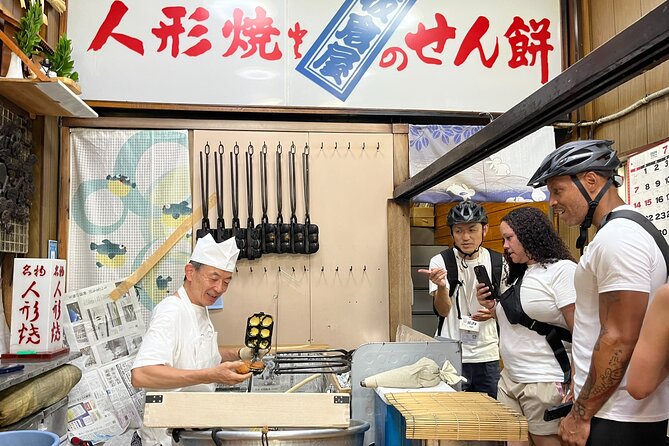
If you want famous sights with a little less “big modern district” energy, choose the Tokyo Tower Route. It mixes a major temple complex, a hill climb that’s made manageable by the e-bike, government architecture, and a big park landing.
Stop 12: Zojo-ji Temple (about 30 minutes)
You start at Zojo-ji Temple, associated with powerful Shogun family ties. The tour frames it as a place connected to success and adds that the temple itself is impressive. This is a strong start because it’s both visually dramatic and culturally grounded.
Passing Tokyo Tower (333 meters)
The ride includes passing Tokyo Tower (listed as 333 meters). This is a classic “yep, that’s Tokyo” moment. It’s quick, but it gives you a clear reference point before you move on to the more intimate spots.
Stop 13: Atago Shrine (about 20 minutes)
Then you bike up toward Atago Shrine, described as being on a small mountain. The tour notes that normally you’d feel like you’re struggling, but the e-bike assist changes the experience. This is the route stop that best proves why e-bike tours are worth it. You get the climb without paying the full physical price.
Stop 14: National Diet Building (about 5 minutes)
You also reach the National Diet Building, built in 1936. The tour calls out the building’s efficient design. The time here is short, so treat it as orientation and quick context, not a long photo session.
Imperial Palace pass with pond ducks (on the way)
The tour mentions a passing view of the Imperial Palace, along with a pond where ducks swim. This is one of those Tokyo details that feels oddly peaceful after moving through traffic and crowds.
Stop 15: Hibiya Park snack and break (about 20 minutes)
The loop ends at Hibiya Park, where you get the snack time at the finish. The park is described as having 150 types of trees and 350 types of flowers. Even if you don’t read plant labels, it’s a nice way to end the ride—quiet pacing after the high-energy city blocks.
Stops, timing, and how to avoid feeling rushed
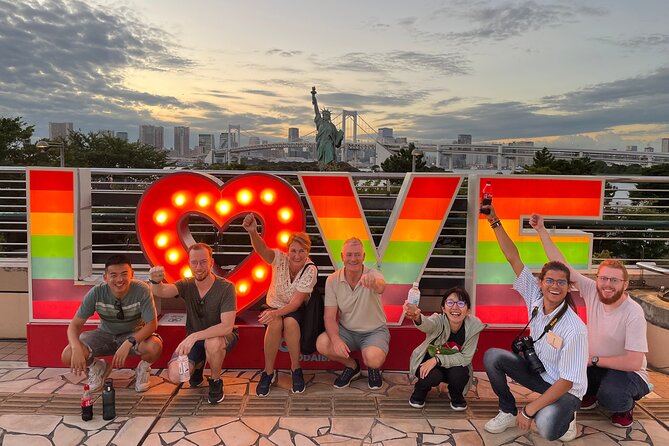
A tour like this works best when you accept a simple rhythm: ride, stop, listen, photo, move again. The listed stop times are short in several cases—sometimes only a minute when you’re passing a major landmark. That’s not a problem as long as your expectations are aligned.
Also note the pacing reality: time can slide due to traffic. The operator states the end time may be delayed about 30 minutes. If you have a tight dinner reservation, build in a buffer.
And be on time. This is a group tour, and if you arrive late, you can’t join mid-way. That’s not them being picky; it’s how they keep the group together and safe.
Price and value: is $63.67 a smart use of time?
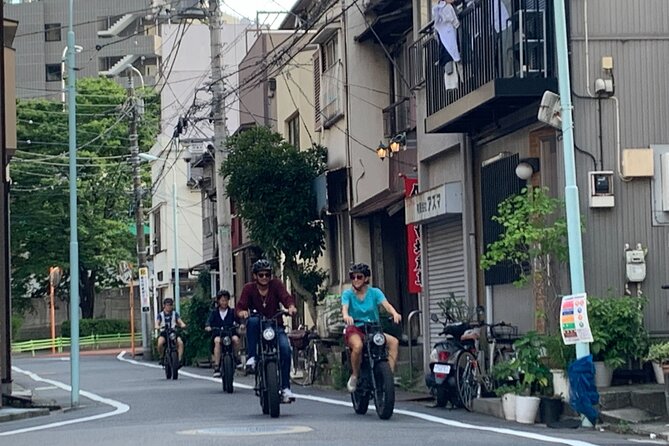
At $63.67 per person, this tour can feel like a splurge—until you break down what’s included. You’re paying for an e-bike, helmet, luggage storage, and the guidance that turns “seeing Tokyo” into “seeing Tokyo in a sequence that makes sense.”
You also get at least one included snack. The City route includes an attraction ticket for Kiyosumi Teien (admission ticket included in the tour details). Many other stops are listed as free to access or are pass-by photo moments, which helps you avoid extra entry costs.
The biggest hidden value is time. A guided e-bike loop from Tsukiji lets you hit multiple areas without the usual commute zigzags. If you only have a few hours in Tokyo and want more than one neighborhood or landmark, this is one of those options that buys back your energy.
What to know before you ride (so the day stays fun)
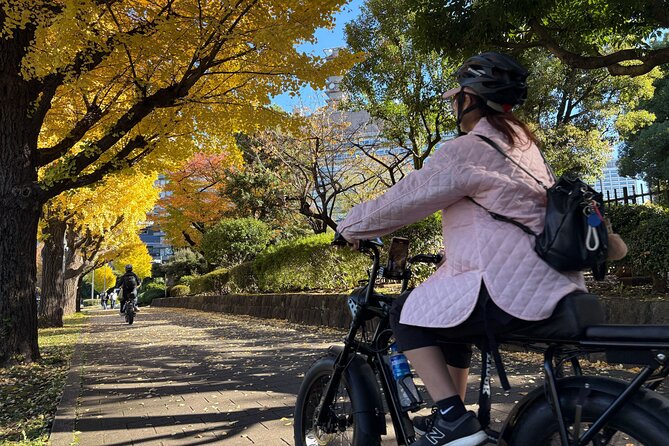
Before you book, check the basic constraints. This tour has a maximum of 6 travelers, which keeps it personal. Age and size rules are clear: you must be at least 12 years old, and participants under 147 cm in height aren’t allowed. The tour also isn’t suitable for anyone over 120 kg.
Dietary limits are strict too. The tour data states they cannot accommodate allergies or vegetarianism. If that’s a concern for you, you’ll want to plan food outside the tour or reconsider.
For comfort, the tour asks for moderate physical fitness. That doesn’t mean you need to be athletic. It means you should be able to ride steadily for the tour duration with short stops, then pedal again without panicking.
Finally, bring the right mindset: this is a guided city ride. You’ll see big sights like Tokyo Station or Tokyo Tower, but you’ll also enjoy quieter moments like temples and gardens—stops chosen to give variety, not just fame.
Should you book this Tsukiji e-bike tour?
I’d book it if you want a fast, structured way to see Tokyo without dealing with navigation and without turning your day into a long walking contest. Pick the route that matches your mood: Tokyo City for classic highlights and a garden, Tokyo Bay Sunset/Night for skyline views and Odaiba energy, or Tokyo Tower Route for temples plus a hill climb made manageable by the e-bike.
Skip it if any of these are dealbreakers for you: you’re not comfortable riding near traffic, your group needs allergy-safe meals or vegetarian food options, or your body size/age falls outside the listed limits.
If you’re in-bounds and you like guided stops with real breaks, this is a strong way to turn a few hours into a memorable Tokyo sampler—on two wheels.
FAQ
What routes are available on this Tokyo e-bike tour?
You can choose from three routes: the Tokyo City Route, the Tokyo Bay Route (Sunset & Night), and the Tokyo Tower Route. Each route has multiple stops and is circular.
Where is the meeting point?
The tour starts at 6-chōme-11-5 Tsukiji, Chuo City, Tokyo 104-0045, Japan, and ends back at the meeting point.
How long is the tour?
The duration is approximately 3 to 4 hours.
What’s included with the tour price?
The tour includes an e-bike, helmet, and luggage storage. The tour also includes gloves during winter, an included Japanese snack, and optional knapsack rental for convenience.
Is the snack included, and are there dietary restrictions?
A Japanese snack is included along the ride. The tour data states they cannot accommodate allergies or vegetarianism.
What are the age and height limits?
Participants under 147 cm in height are not allowed, and ages 12 and younger are not permitted.
Is there a place to store luggage?
Yes. If you need to leave luggage, there is a place to keep it at the e-bike shop. A knapsack rental is also listed as available.
What happens if the tour is canceled due to rain or bad weather?
If the tour cannot be held due to rain or other reasons, the operator will notify you by e-mail. You’ll be offered options such as changing the itinerary or choosing a different tour, and if it’s canceled due to poor weather, you’ll be offered a different date or a full refund.